Table Of Content
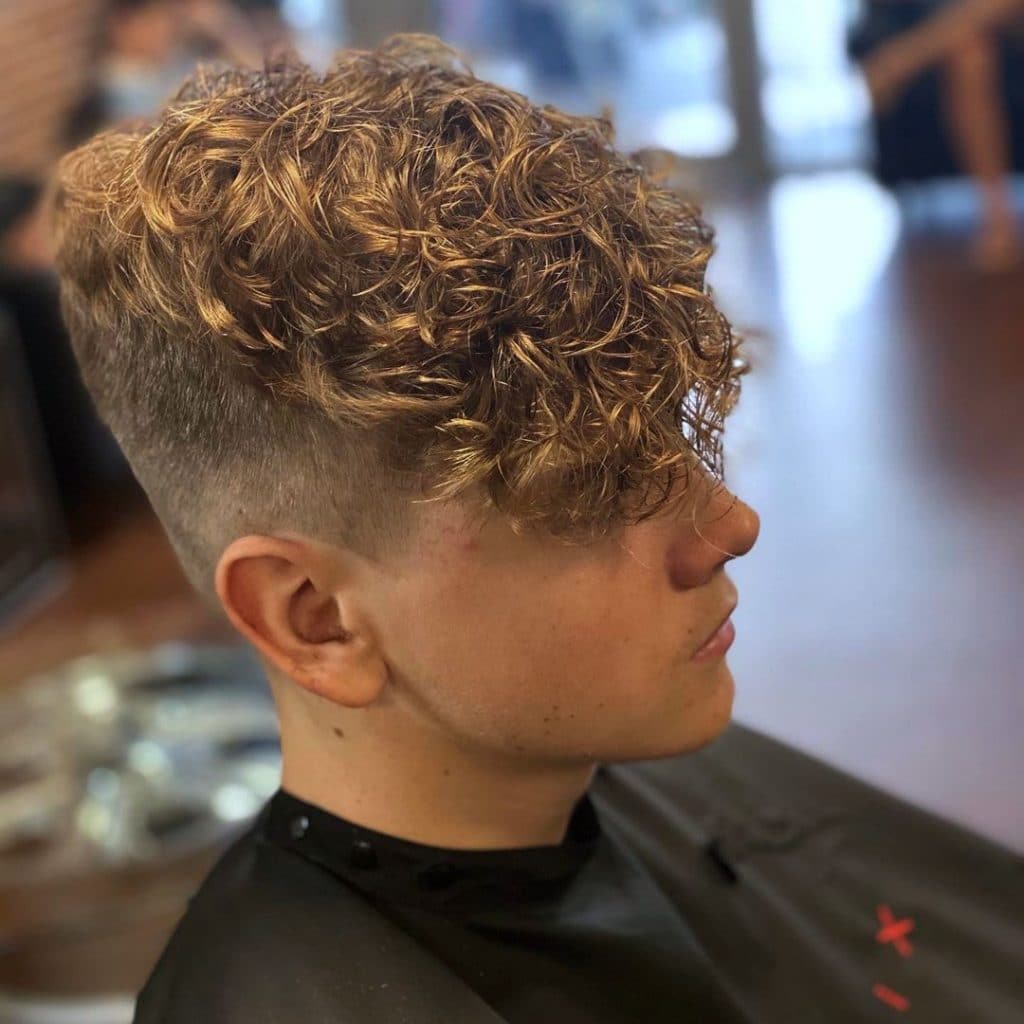
Whether you get a hot or a cold perm, rods and rollers will be applied to your strands to get the job done. Also known sometimes as a ‘cold perm’, the chemical option for altering the texture of your client’s hair does not require heat. For this method hair will still be wrapped around rods of different sizes (depending on the size of curl and kind of texture the client is aiming for), but the rods are not heated. Instead it uses a thermal induction to change hair structure, a solution of chemicals is used to breakdown and reshape hair into a new look. Once your client’s hair is wrapped in rods and the perm lotion has been carefully and meticulously applied, they wait for their perm to set.
Hair Relaxer Cancer Lawsuit - Lawsuit Information Center Blog
Hair Relaxer Cancer Lawsuit.
Posted: Mon, 22 Apr 2024 13:26:21 GMT [source]
Applying the Perm Solution
Short for "permanent hairstyle," a perm is a chemical treatment thats alter the structure of your hair follicle to transform straight hair into wavy or curly hair. A perm isn't completely permanent—it typically only lasts six months. However, a perm is still a harsh chemical process that you shouldn't take lightly. The chemical process will change you hair's structure and texture until it grows out, which typically is a few months to a year for most guys. To perm your own hair at home, first shampoo your hair and pat it dry so it’s not soaking wet. Skip conditioner since it will stop the perm solution from setting properly.
What's Different About Modern Perms?
This lotion is packed with a good amount of vitamin E and other nutrients for the hair. The name tells you everything – Experts suggests this air-dry cream if your style is a carefree boho vibe. Make sure that you maintain the heat down to 300oF if you want a flat iron. You’ll blast all moisture out of the hair if you use it at 450 degrees. It hits the hair, and from heat damage, you might lose the perm. The easiest approach to shine your new curls is to let your hair dry most of your way, then apply a diffuser according to most hair experts.
Visit our Salon!
If you really want to enhance your waves, you can use a curling wand, too. Moisturizing is another key part of keeping your perm looking shiny and healthy as long as possible. Chemical treatments cause damage and dryness, so keeping your hair moisturized will help prevent frizz.
Bob with Thin Perm Curls
But believe it or not they are making a comeback, and for a good reason. For this look, the bangs are just slightly asymmetric, rather than blunt. The best way to get the bounciness your curls deserve is to—hear us out—chop off the length that could potentially be weighing them down. This short, lightweight bob is just the ticket to curls that look alive. No, dyeing your hair right after getting a perm or vice versa is not recommended; doing so can greatly damage your hair.
Make a major statement with blunt curly bangs to complement long, luscious permed locks. Isn’t it great how a perm can offer so much more than spiral curls? Thanks to innovative hair experts, a perm can now be enjoyed by pretty much everyone.
Even if there’s a new kind of perm every two years, it looks like contemporary images of the once-dated style have made it fashionable again. Traditional perms can be a little too harsh for individuals with highlights. Read on to learn about all the available perms and which perm will be right for you.

Not only do they involve a chemical process that borders on scientific, but they encompass an array of styles—straight, wavy, and curly. The appeal is that you can change your hair texture and thus simplify your daily styling process. But before you impulsively book an appointment to give it a try, doing your research is of utmost importance. Ahead, we’re breaking down everything you need to know about how to get the perfect perm for your hair type. Dudley says spiral perms create various-sized tight curls at different lengths by wrapping the hair vertically around rods.
Dudley says spiral perms, body waves, and beach wave perms are trending for straight hair. "They look more like a natural wave or curl, which is why they're popular." An early alternative method for curling hair that was suitable for use on people was invented in 1905 by German hairdresser Karl Nessler.[5] He used a mixture of cow urine and water. The first public demonstration took place on 8 October 1905, but Nessler had been working on the idea since 1896. Previously, wigs had been set with caustic chemicals to form curls, but these recipes were too harsh to use next to human skin.
In New York, he found that hundreds of copies of his machine were in use, but most did not work well and were unreliable. Nessler opened a shop on East 49th Street, and soon had salons in Chicago, Detroit, Palm Beach, Florida and Philadelphia. Nessler also developed a machine for home use that was sold for fifteen dollars. However, his machine made little impression in Europe and his first attempts were not even mentioned in the professional press, perhaps because they were too long-winded, cumbersome and dangerous. It's also a good idea to invest in a silk pillowcase, if you haven't already, or sleep with a hair bonnet to protect your strands from friction, tangles, and frizz while you toss and turn.
This resulted in addition of a sulfite, bisulfite or metabisulfite to Icall reagents, sulfur dioxide, a reducing agent, being evolved on heating. The only alternative to sulfites at the time would have been mercaptans which are unpleasant to use. However, later alternatives were found which led to the development of cold-waving. Bari-Woollss left Icall in about 1934 to take over the editorship of an encyclopedic volume on women's hairdressing. Eugene Suter was a Swiss immigrant who set up a fashionable ladies' salon in London's West End. He claimed to have come from Paris, which in those days was the center of fashion and style.


No comments:
Post a Comment