Table Of Content
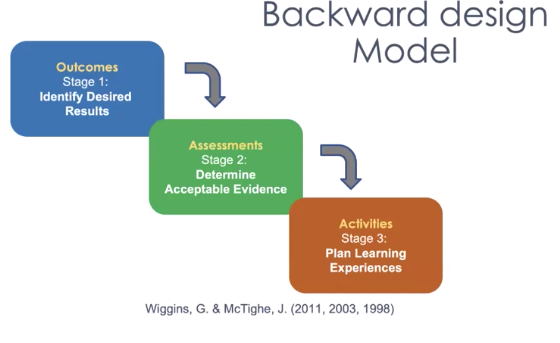
Teachers first decide what to teach (content), then how to teach it (methods and activities), and finally, how to evaluate learning (assessment). One of the most celebrated aspects of Backward Design is its focus on clear learning objectives. By defining what students should know or be able to do by the end of a lesson, educators can offer a more targeted and effective learning experience. Knowing the end goals allows teachers to craft learning experiences that offer just the right level of challenge and support, enabling students to work in their Zone of Proximal Development and thus optimize their learning. When teachers use Backward Design, they can consult Bloom's Taxonomy to identify the level of cognitive skills they wish students to attain. Whether the goal is simply to remember dates or analyze historical events, Backward Design helps educators map out a targeted learning path to achieve the desired complexity level.
2022 Mercedes-Benz C-Class debuts with crazy tech, electrified drivetrain - CNET
2022 Mercedes-Benz C-Class debuts with crazy tech, electrified drivetrain.
Posted: Tue, 23 Feb 2021 08:00:00 GMT [source]
Stages of backward design
With intended learning outcomes in hand, the next step of the backward design process is to create assessments that appropriately measure students’ attainment of intended learning outcomes. Various kinds of assessments can fill this role, as long as the assessment task is closely aligned with the action described in the ILO. (26 PD Hours) In this course, participants will learn the importance of and how to align your instructional strategies and activities with your learning objectives and plans for assessments. Once you have written a student-centered learning objective, and determined how you will assess your students, you are ready to plan the instructional strategies and activities you will implement.
Benefits of using a backward design lesson plan
In defining specific course goals, many teachers make use of A Taxonomy for Learning, Teaching and Assessing (Anderson, Krathwohl, 2001) as a guide. This taxonomy describes cognitive learning processes with respect to increasing levels of abstraction and complexity, from basic to advanced, around which goals can be organized. The first step to producing quality online, blended or face-t0-face courses is quality course design. The most common approach to course design is to begin with a consideration of the most suitable methodologies for teaching content. In other words, the focus is typically on how the content will be taught, rather than on what is to be taught.
Time-Consuming Planning Phase
This refers to a degree of accuracy, the number of correct responses, or perhaps a teacher-imposed time limit. Now once we’ve done those two steps, lets compare them side by side to see if they match the content that we are bringing in. If you feel that the content in the chapter doesn’t reflect the outcomes, then cut it out and put it in a separate document so that you have it later on. Backwards design is simply starting from the outcome (or transformation) for your students & building the modules/chapters/sections with those outcomes in mind. The most important decision for a curriculum committee to make regarding which design to use should be based on what is most appropriate for the school or district.
The benefits & advantages of online learning
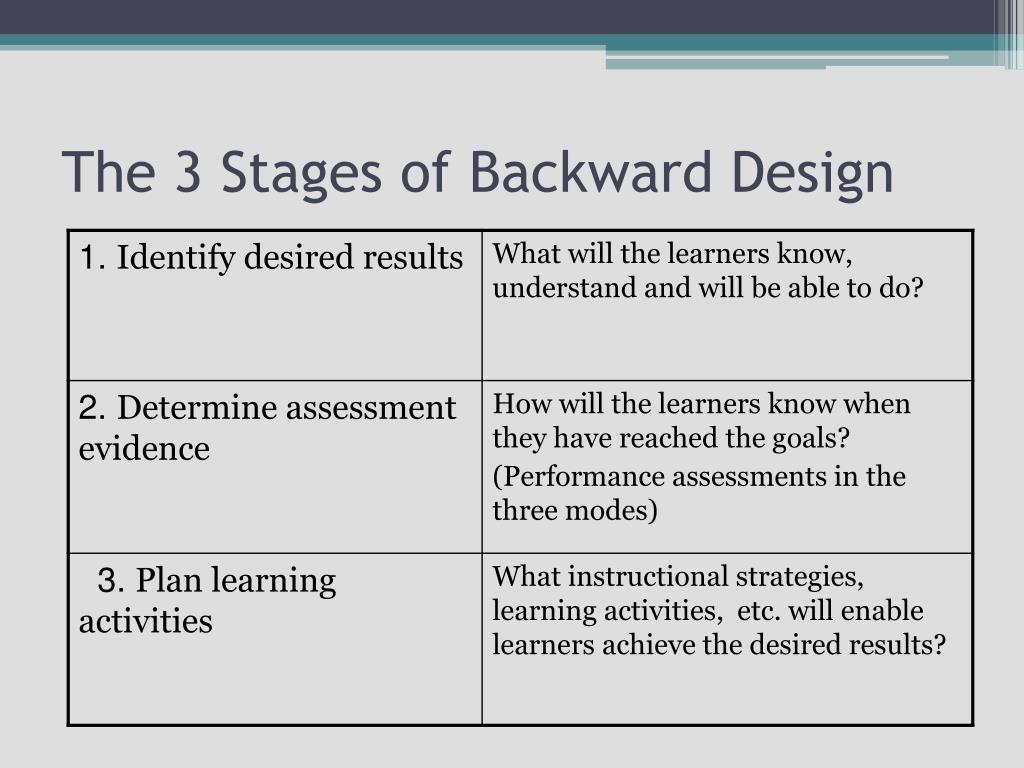
Student learning and understanding can be gauged more accurately through a backward design approach since it leverages what students will need to know and understand during the design process to progress. In this template, think of goals as the course learning outcomes (CLOs), the essential understandings as the core concepts and competencies, and performance tasks as the learning objective. So far you have defined your course learning goals and outcomes and planned your assessments of student learning.
Prioritize Student Understanding

Only when one knows exactly what one wants students to learn should the focus turn toward consideration of the best methods for teaching the content, and meeting those learning goals. This lesson planning template will walk teachers through the three steps of the backwards design process in order to plan an effective lesson. It will begin with writing a clear content objective, then move onto creating an effective assessment that measures student mastery of the content objective, and finish with choosing appropriate instructional activities. Normally, or with traditional lesson planning, you focus on standards and learning objectives. Design your tests and assessments first, then figure out your lesson plans, then teach your students.
Stage Three – Plan Learning Experiences and Instruction:
Instead of starting with what educators want to do, it starts with what students need to learn. This learner-centered focus makes it a powerful approach for modern education, where student engagement and outcomes are increasingly emphasized. Educational technology experts like Dr. Ruben Puentedura, known for the SAMR model, suggest that technology can play a powerful role in implementing Backward Design. Whether it's digital assessments or interactive activities, technology can offer innovative ways to achieve your learning objectives. This method is rooted in the constructivist theories of educators like Jean Piaget. Like Backward Design, Inquiry-Based Learning encourages higher-order thinking skills.
While it is still widely used, Forward Design can sometimes lead to misalignment between learning objectives and assessments, something that Backward Design explicitly seeks to avoid. When discussing the theoretical foundations of Backward Design, it's impossible to ignore Constructivism. This educational theory was primarily influenced by the works of Jean Piaget, a Swiss psychologist, who introduced these ideas in the mid-20th century.
This is in contrast to schools and teachers who want to have as many students as possible attain high scores. Performance tasks determine what students will demonstrate and what evidence will prove their understanding. Before applying the backward design model, understanding the 7 principles and the big picture will support effective planning with clearly defined goals, aligned assessment and coherent lessons.
In traditional curriculum planning, a list of content that will be taught is created and/or selected.[4] In backward design, the educator starts with goals, creates or plans out assessments and finally makes lesson plans. Supporters of backward design liken the process to using a "road map".[5] In this case, the destination is chosen first and then the road map is used to plan the trip to the desired destination. In contrast, in traditional curriculum planning there is no formal destination identified before the journey begins.
Angela Chao's death reveals Tesla's long-standing reverse gear issues - Business Insider
Angela Chao's death reveals Tesla's long-standing reverse gear issues.
Posted: Wed, 13 Mar 2024 07:00:00 GMT [source]
If you have a goal that has zero corresponding outcomes, it should not be a learning goal for your course. If you have a goal that has far too many corresponding outcomes, there may be another goal floating among them that you haven't articulated yet. If you have learning goals that are closely related, you may have learning outcomes that correspond to more than one goal in your course. Backward Design serves as more than just a tool for curriculum planning; it represents a shift in how we think about education.