Table Of Content

In theory, this will mean that every test your students take is relevant and helpful and shows them exactly what they do and do not need to do in order to pass your course. To connect directly with our partners for teaching support or for help with Ohio State eLearning tools, visit our help forms. Reflect upon the impacts of climate change on their local communities and in their everyday lives. Professor Buckeye has been asked to teach an introductory course on a standard topic in his discipline—it’s a course he’s never taught before and it’s not exactly in his area of expertise.
Kolb’s Experiential Learning Theory & Learning Styles
For a deep dive into choosing and using technology for your course, register for the Technology-Enhanced Teaching course. Backward Design focuses on what students need to know, understand and be able to do as a result of provided instruction[3]. The desired result is the catalyst for all related instructional and assessment planning. Emphasis is placed on essential questions and what is most important for students to understand and know (student learning), rather than on materials, topics and content an instructor might be most comfortable with (student teaching). Student understanding is a central focus of the backward design methodology[3].
Planning For Instructional Strategies & Learning Activities
Whether you're teaching in a traditional classroom, a corporate setting, or an online platform, taking the time to plan backward can lead to more effective, engaging, and meaningful learning experiences. Rather than starting with decisions about course content, the backward design process begins by asking you to determine what you want students to learn. Assignments are then developed, with the aim of allowing students to practice and demonstrate that learning. It is only toward the end of the backward design process that decisions about course content finally appear, guided by reflection on what students will need in order to perform well on the assignments. In their excellent book, Understanding by Design, Wiggins and McTighe propose the “Backward Design” framework for course design. This framework is “backward” only to the extent that it reverses the typical approach, so that the primary focus of course design becomes the desired learning outcomes.
About the Teaching Handbook
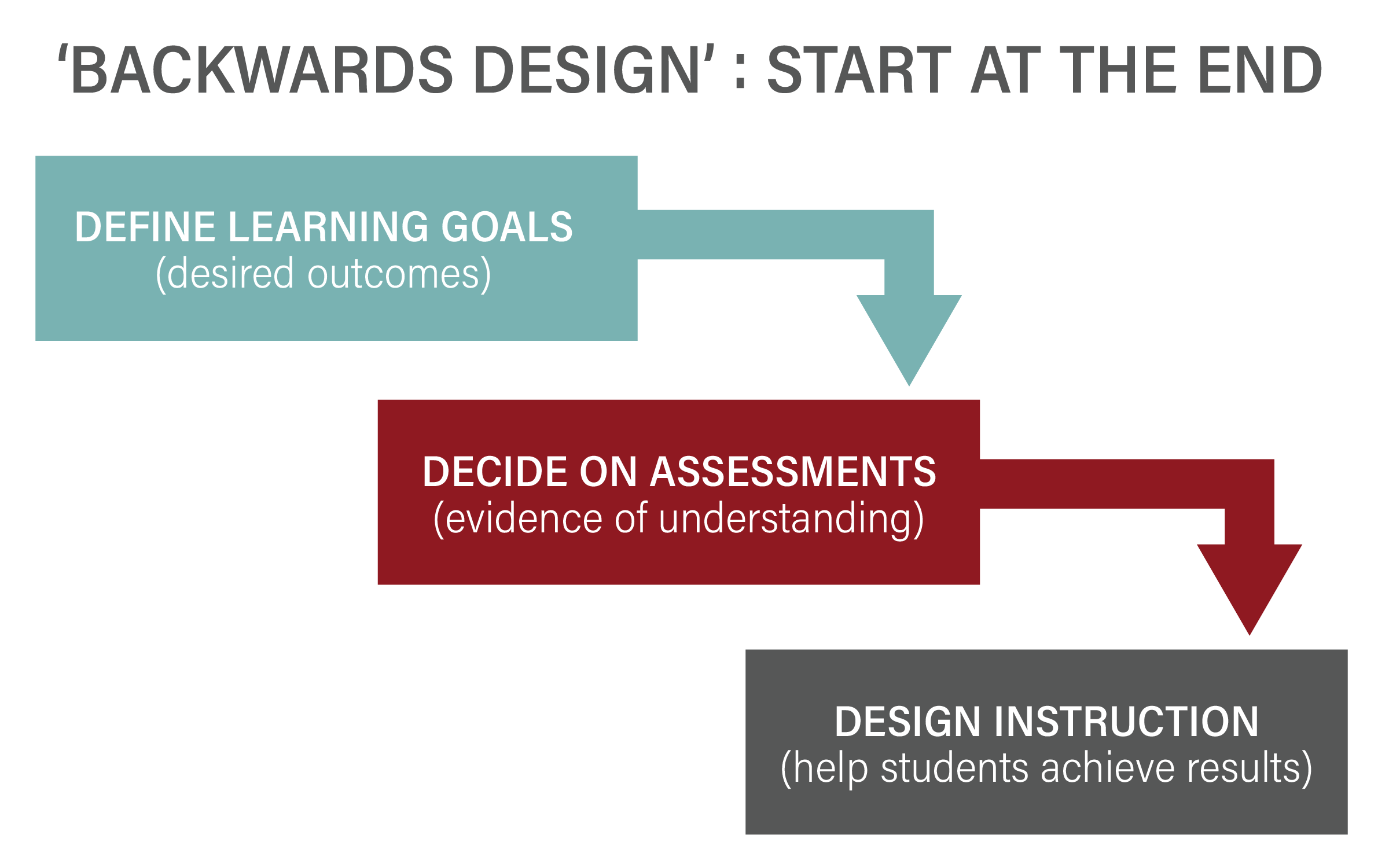
As a strategy for designing, planning, and sequencing curriculum and instruction, backward design is an attempt to ensure that students acquire the knowledge and skills they need to succeed in school, college, or the workplace. In other words, backward design helps educators create logical teaching progressions that move students toward achieving specific—and important—learning objectives. Backward design, also called backward planning or backward mapping, is a process that educators use to design learning experiences and instructional techniques to achieve specific learning goals.
How To Hire Freelancers To Help Create & Market Your Online Course
It is important to note here that assessment should not be limited to one test at the end of a unit. Effective assessment is ongoing, and begins before new content is even introduced. People don’t buy online courses for fun or to gain new knowledge, they buy online courses and learn from you to experience a transformation whether that be a healthier lifestyle, weight loss, or acquire skills to uplevel in their job. As a result, Blooms Taxonomy guides the lesson planning and helps us frame each lesson with clarity, purpose, and specificity that sets clear expectations. Backward design works best when the school or district develops its own tests so they know what the targets are. Even without the knowledge of what is on the tests, most districts tend to favor backward design or backloading because there is great pressure from the stakeholders for students to attain high test scores.
Traditional vs. Backward Planning
The concern here is the potential for "teaching to the test" at the expense of a more holistic education. By being aware of these potential pitfalls, teachers, trainers, and curriculum designers can take steps to mitigate them. Plus, because Backward Design focuses on real-world skills and applications, students can easily see the value in what they're learning.
By creating a curated framework, instructors can teach students how to learn in the discipline rather than focusing on content coverage (Peterson et al. 2020). This Drake Institute program offers guidance and compensation to full-time (.75 FTE) faculty at Ohio State for time spent researching evidence-based teaching practices and redesigning their courses around those teaching practices. You’ll probably have somewhere in the range of three to seven learning goals for the course you are designing. Some of these might turn out to be not just fun to teach, but also solid in terms of equipping students with knowledge and skills that will last. I had decent relationships with my students and I believe most of them had good experiences in my classroom, but real, durable learning?
Aligning assessments & instruction
This teaching guide will explain the benefits of incorporating backward design. Finally, an overview of a backward design template is provided with links to blank template pages for convenience. The purpose behind Blooms Taxonomy is to help us guide our students from learning to acquire new knowledge to more concrete and higher levels of mastery such as application, analysis, critical thinking and evaluation. If you’ve never heard of backwards design or see it being used then it is because most of the time people are using a traditional approach. The traditional design approach is the exact opposite- the process starts at the front and works its way to the end. When we first begin the process of building our online course, we are overwhelmed by all the different ways to begin the process.
Collaboration can provide invaluable insights and make the planning process less burdensome. Teams of teachers often find it easier to brainstorm learning goals, assessment methods, and instructional strategies. Renowned educator Carol Ann Tomlinson, who we mentioned earlier, supports the idea of collaborative teaching and planning. Each of these educational frameworks has its merits, but Backward Design stands out for its focus on alignment between learning objectives, assessments, and instructional strategies.
Why Is Stellar Blade's Character Model Causing Controversy? - TheGamer
Why Is Stellar Blade's Character Model Causing Controversy?.
Posted: Fri, 09 Feb 2024 08:00:00 GMT [source]
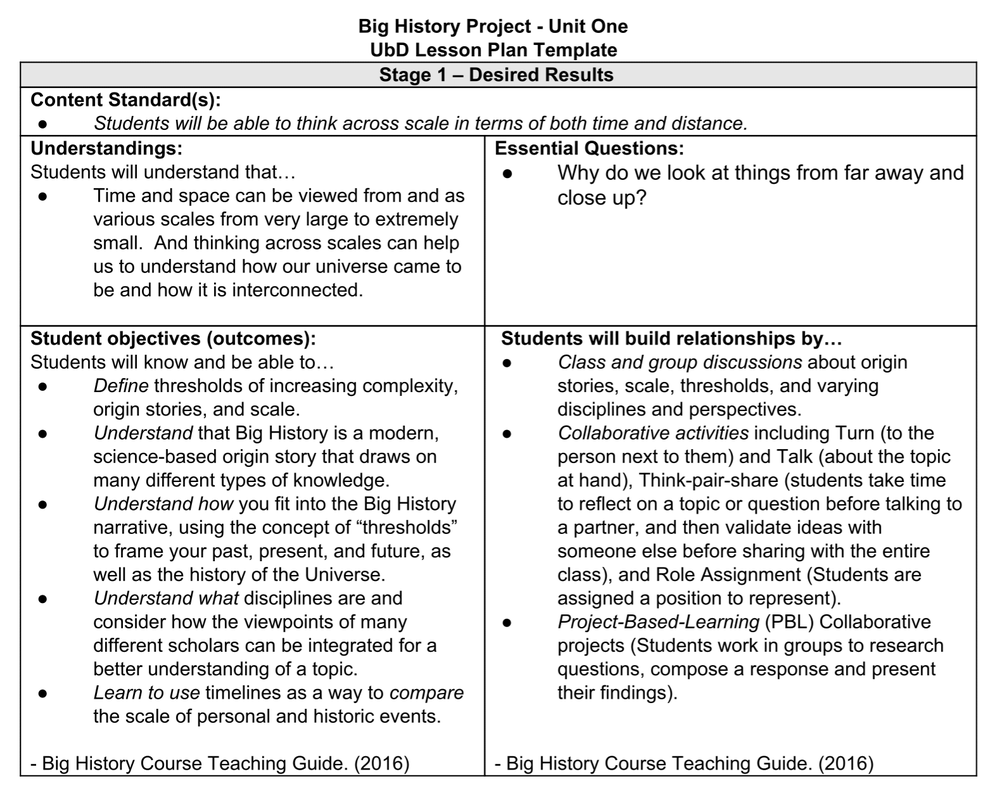
Therefore, backward design is an effective way of providing guidance for instruction and designing lessons, units, and courses. Once the learning goals, or desired results, have been identified, instructors will have an easier time developing assessments and instruction around grounded learning outcomes. The first question listed above has instructors consider the knowledge that is worth being familiar with which is the largest circle, meaning it entails the most information. The second question above allows the instructor to focus on more important knowledge, the knowledge and skills that are important to know and do. Finally, with the third question, instructors begin to detail the enduring understandings, overarching learning goals, and big ideas that students should retain.
Because understanding how Backward Design works can make anyone a better learner and even a better teacher, whether you're helping your kid with homework or leading a team at work. Plus, it's a learning tool that schools and companies are using more and more, so it's good to know what it's all about. The concept of Backward Design was invented by two education experts named Grant Wiggins and Jay McTighe in the late 1990s. Their goal was to make learning more focused and useful, not just for kids in school but also for adults in professional settings. Well, there's a good chance the person teaching you used Backward Design to plan that awesome learning experience.
The following template shows how curriculum is developed, with an eye to “Desired Results” which can be translated to test scores. Be prepared to review the columns for alignment, move things around, and update your Course Plan as needed as you progress through each step. This psychological theory was developed by Edward L. Deci and Richard M. Ryan in the late 1970s and early 1980s. Self-Determination Theory emphasizes the importance of people feeling in control of their actions, and it posits that this autonomy leads to increased motivation and better outcomes. That's a quick tour of how Backward Design came to be and how it's changed the world of education and training.


No comments:
Post a Comment